

Search Engine Optimization (SEO) has transformed from a simple keyword-stuffing exercise into a sophisticated discipline that blends technical expertise, content strategy, and user psychology. In today’s digital landscape, where AI-powered search engines dominate and user expectations continue to rise, mastering SEO is no longer optional for businesses seeking online visibility—it’s essential for survival. This comprehensive guide explores the fundamental principles, cutting-edge strategies, and actionable tips that will elevate your website’s search rankings and drive sustainable organic growth.
Understanding SEO Fundamentals
SEO encompasses the strategies and techniques used to improve a website’s visibility in search engine results pages (SERPs). At its core, SEO works by aligning your content with what search engines consider valuable and relevant to user queries. Search engines like Google use complex algorithms that analyze hundreds of ranking factors, including content quality, technical performance, user experience, and authority signals. The goal isn’t just to rank higher—it’s to attract qualified traffic that converts into customers, subscribers, or engaged readers.
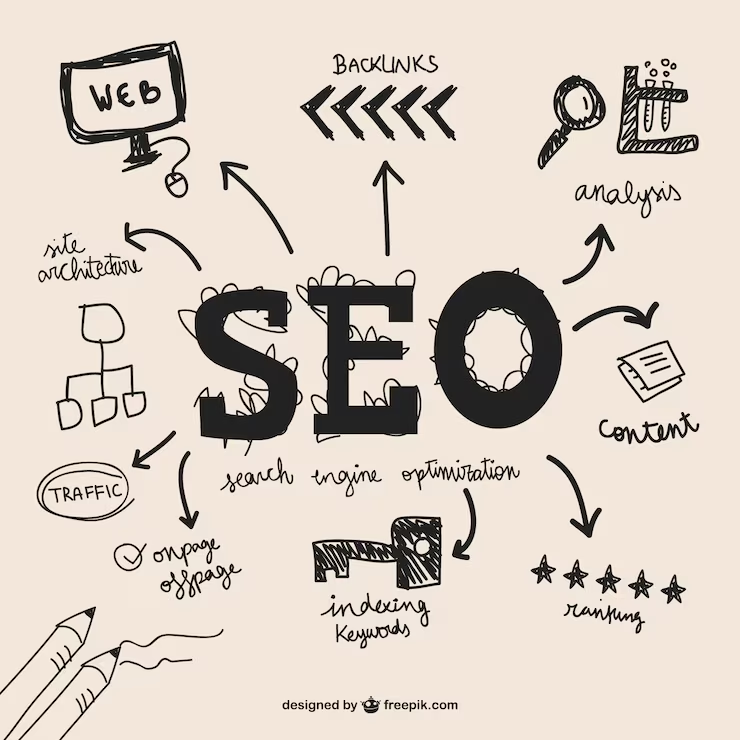
Modern SEO operates on three pillars: technical optimization, on-page elements, and off-page authority. Technical SEO ensures search engines can crawl, index, and understand your website efficiently. On-page SEO focuses on optimizing individual pages with relevant content, proper formatting, and strategic keyword placement. Off-page SEO builds your site’s authority through backlinks, brand mentions, and social signals that demonstrate credibility and trustworthiness.
The AI Revolution in Search
Artificial Intelligence has fundamentally reshaped how search engines process queries and deliver results. Google’s AI Overviews now appear in nearly 19% of searches, particularly in business and technology sectors, providing instant answers without requiring users to click through to websites. This shift toward zero-click searches—which now account for 60% of Google queries—means businesses must adapt their content strategies to remain visible.
The rise of AI-powered answer engines like ChatGPT, Perplexity, and Claude represents a new frontier for SEO professionals. These platforms are becoming significant non-Google traffic sources, requiring content creators to optimize for both traditional search engines and conversational AI systems. Success in this environment demands creating high-quality, user-intent-driven content that demonstrates genuine expertise and provides unique perspectives that AI cannot easily replicate.
Content Strategy That Converts
Creating content that ranks requires moving beyond keyword-focused optimization to user-focused optimization. This means addressing search intent comprehensively and answering the granular questions users actually ask. Every piece of content should serve a clear purpose within your broader content ecosystem, organized around 4-6 topical content pillars that establish your authority in specific subject areas.
Effective content strategy in the current landscape prioritizes original industry research, thought leadership, and comprehensive topic coverage. Publish consistently—at least twice weekly—to signal freshness to search engines and maintain audience engagement. Incorporate various content formats including text, video, infographics, and interactive elements to capture attention across different user preferences and search result types. Remember that content must balance providing enough information to earn featured snippet placement while still compelling users to click through for deeper insights.
Technical SEO Essentials
Technical excellence forms the foundation of any successful SEO strategy. Mobile optimization is non-negotiable, as the majority of searches now occur on mobile devices. Ensure your website uses responsive design with properly sized tap targets (at least 44×44 pixels), readable font sizes without requiring zoom, and forms that work seamlessly on touchscreens.
Page speed optimization directly impacts both user experience and search rankings. Compress images using modern formats like WebP and AVIF, implement lazy loading for below-fold content, eliminate render-blocking resources, and minimize unused JavaScript. Core Web Vitals—metrics measuring loading performance, interactivity, and visual stability—have become critical ranking factors that require ongoing monitoring and optimization.
Structured data and schema markup help search engines understand your content’s context and increase eligibility for rich results. Implement BreadcrumbList schema for improved navigation display, VideoObject schema for video content, and WebPage schema with speakable properties for voice search optimization. Properly implemented schema markup can increase click-through rates by up to 30% according to industry case studies.
Keyword Research and Optimization
Strategic keyword research forms the backbone of effective SEO campaigns. Focus on identifying keywords that align with your content pillars while analyzing both search volume and user intent. Target long-tail keywords—longer, more specific phrases that face less competition and often indicate higher purchase intent. These keywords may generate less traffic individually but collectively drive more qualified visitors who are closer to conversion.
Place your primary keyword strategically within the first 100 words of your content, in your title tag, in at least one heading, and naturally throughout the body text. However, avoid keyword stuffing—aim to use your target phrase 1-4 times depending on content length, always prioritizing natural readability. Incorporate related keywords and semantic variations to provide comprehensive coverage of your topic while matching the natural language patterns search engines now expect.
.
Building Authority Through Links
Backlinks remain one of the most powerful ranking signals, serving as votes of confidence from other websites. Focus on acquiring high-quality backlinks from authoritative, relevant sources rather than pursuing sheer volume. Create linkable assets such as original research, comprehensive guides, infographics, and interactive tools that naturally attract links from other publishers.
Internal linking strengthens your site’s structure by connecting related content, distributing page authority, and helping search engines understand your site’s hierarchy. Every new piece of content should include 3-5 internal links to relevant existing pages, while older content should be updated to link to newer resources. This creates a web of connections that improves user experience and helps search engines discover and index your entire site efficiently.
Visual and Video Optimization

Visual search is rapidly gaining prominence as users increasingly search with images rather than text through tools like Google Lens and Pinterest Visual Search. Optimize images by using descriptive, keyword-based filenames, adding concise alt text that describes the content, and compressing file sizes for faster loading. Alt text serves dual purposes—improving accessibility for visually impaired users and providing context for search engine crawlers.
Video content has become essential for maximizing SERP visibility, with YouTube increasingly dominating Google’s video results. Optimize video content with keyword-aligned titles and descriptions, embed videos near related text content, and use VideoObject schema markup to enhance indexing. Consider creating video content that addresses common questions in your industry, as these formats often capture featured snippet positions and appear in multiple search result types simultaneously.
Measuring Success and Continuous Improvement
SEO success requires consistent monitoring and data-driven optimization. Implement Google Search Console to track impressions, clicks, click-through rates, and average positions for your target keywords. Analyze which pages drive the most valuable traffic and identify opportunities to replicate that success across other content.
Refresh outdated content regularly by updating statistics, adding new sections, improving visuals, and strengthening internal linking. Pages that have lost rankings often benefit significantly from comprehensive updates that signal freshness to search engines. Remove or consolidate non-performing pages that dilute your site’s overall quality signals.
Focus on metrics that matter beyond traffic volume—track conversion quality, engagement rates, and the business outcomes your SEO efforts generate. Adapt your strategy based on performance data, industry trends, and algorithm updates. SEO is not a set-it-and-forget-it discipline but an ongoing process of testing, learning, and refining your approach to maintain competitive advantage in an ever-evolving digital landscape.


nice